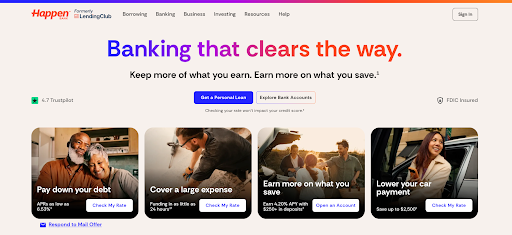
As Senior Content Strategist at LendingClub, I created the company’s first integrated content strategy, turning a large, unfocused content library into a system built for leads and conversions.
At a glance
Company: LendingClub, a consumer and small business lending platform (B2C and B2B)
My role: Senior Content Strategist, reporting to the CMO; led 2 agencies, 10 contractors, and 1 direct report
Focus: content strategy, SEO, email, direct mail, landing pages, and editorial operations
Results: 9% more loan applications · 10%+ quarter-over-quarter SEO growth · 27% more page views
Why it mattered
LendingClub serves millions of people across very different financial needs: personal loans, banking, auto refinancing, personal loan refinancing, and business loans. Each product has its own audience and its own path to applying. Content was supposed to guide all of them, but without a shared strategy, it wasn’t guiding anyone very well.
The challenge: lots of content, little direction
When I arrived, LendingClub had a large library of content, but it wasn’t built around leads or conversions.
No unified strategy: web, blog, email, landing pages, and direct mail were all created separately.
Five product lines competed for attention without a shared plan.
No standards: there were no consistent process, editorial rules, or templates for teams to work from.
Heavy compliance requirements: every consumer-facing piece in lending had to be accurate and legally reviewed.
The approach
I started by asking what each piece of content was supposed to do for the business. From there, I built one strategy that connected every channel to the goal that mattered most, getting the right people to apply, and created the systems that would let a large team execute it consistently.
What I built
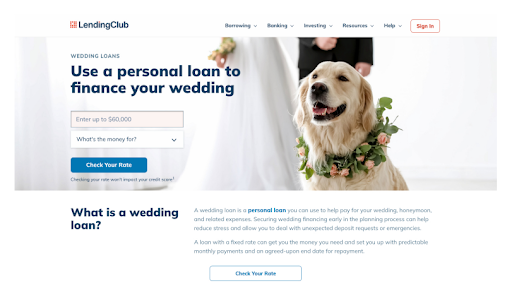
The first integrated content strategy: unified website, blog, email, landing pages, and direct mail under one plan, optimized for SEO and aligned to lead generation across all five product lines.
The operating system to run it: process guides, editorial standards, and content design templates that agencies, contractors, and internal teams could all work from.
An SEO content program: restructured and optimized content so it ranked for what borrowers were actually searching for.
Multi-channel campaigns: coordinated web, email, and direct mail campaigns that moved people from learning to applying.
A customer testimonial program: wove real customer stories into landing pages, emails, blogs, and video to build trust.
Cross-functional partnerships: worked closely with sales, legal, finance, operations, and design to keep content compliant, accurate, and on-brand.
The results
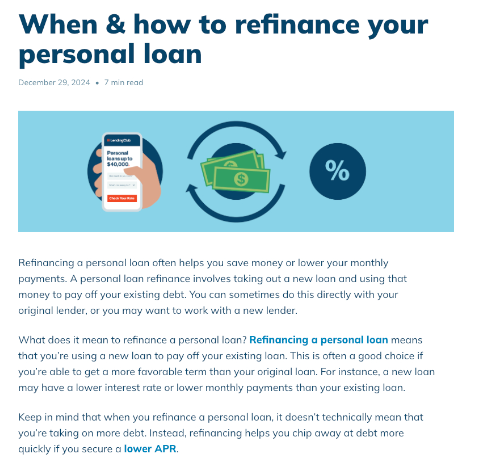
Loan applications rose 9%, and the SEO program kept growing more than 10% every quarter.
9% more loan applications
10%+ quarter-over-quarter SEO growth
27% more page views
5 product lines unified under one strategy
At scale, content problems are usually system problems. More content wasn’t the answer. A shared strategy, clear standards, and templates people could actually use were what turned a sprawling library into something that drove applications.
