As Head of Marketing at Willow, I took a company that relied almost entirely on paid ads and rebuilt its marketing into a multi-channel engine, reporting to the CEO and Board.
At a glance
Company: Willow, a wealth management marketplace connecting financial advisors with consumers (B2B and B2C)
My role: Head of Marketing, reporting to the CEO and Board; owned a $500K annual budget and led employees, contractors, and 3 agencies
Focus: strategy, paid media, SEO and AEO, email, video, PR, and reporting
Results: 256% lead growth · 55% lower cost per lead · paid conversion from 2% to 10%
Why it mattered
Willow runs a two-sided marketplace. Financial advisors pay to join, and Willow sends them leads from consumers looking for an advisor they can trust. That means marketing has to win two very different audiences at once, and if either side stalls, the whole business stalls.
The challenge: one channel doing all the work
When I joined, Willow’s marketing ran almost entirely on paid ads and programmatic SEO, and neither was delivering.
Paid search was expensive and converting at just 2%.
A costly PR retainer was producing a handful of podcast appearances a year and no attributable leads.
There was no organic engine: no real content program, no SEO strategy, and an email program that barely got clicks.
There was no shared reporting, so it was hard to tell what was working or where the budget should go.
The company was paying for growth instead of building it.
The approach
I started with a full audit of every channel, agency, and dollar of spend, then took a clear recommendation to the Board: shift from a paid-only approach to a multi-channel strategy where each channel feeds the others. Once the Board signed off, I rebuilt the team and the plan around that idea.
What I built
A reset team and budget: audited every agency and freelancer, replaced the ones that weren’t performing, hired a new paid media agency, and set a sustainable budget with clear benchmarks.
A paid program that compounds: built a rolling test-and-learn strategy with the new agency, developed the creative, monitored performance weekly, and reallocated budget monthly to whatever was working best.
SEO and AEO from scratch: built the organic strategy and playbook, brought on the contractors and platforms to run it, and owned a mobile-first website redesign with designers and engineers.
Email, rebuilt end to end: a new funnel, audience segments, re-engagement campaigns, and a newsletter, all with their own benchmarks and reporting.
Video and thought leadership: launched the company’s first video program (talent, scripts, editing, and distribution on YouTube and social) and built a CEO thought leadership program.
PR that pays off: replaced the old PR approach with agencies matched to our goals and tied podcast appearances to leads.
Speaking to two audiences
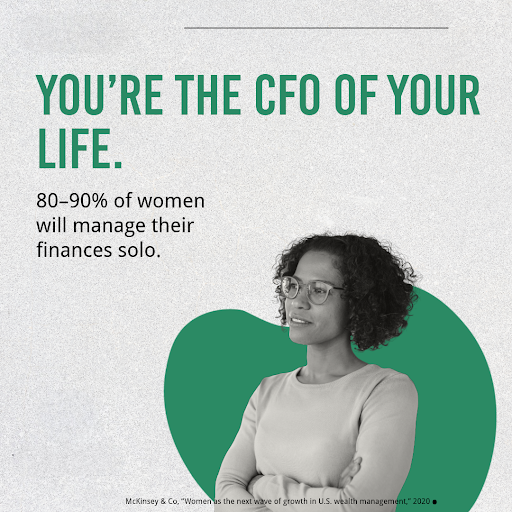
Advisors and consumers sign up for completely different reasons, so I ran two messaging strategies in parallel:
Advisors (B2B) decide on data: how many leads they’ll get and how valuable those clients are. Their marketing focused on numbers, proof, and return on investment.
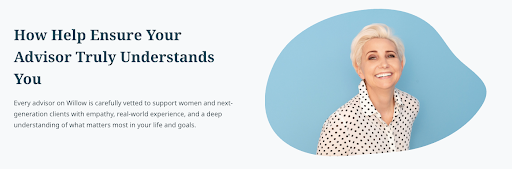
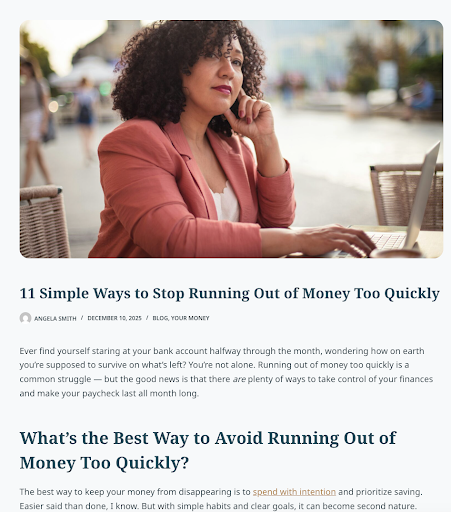
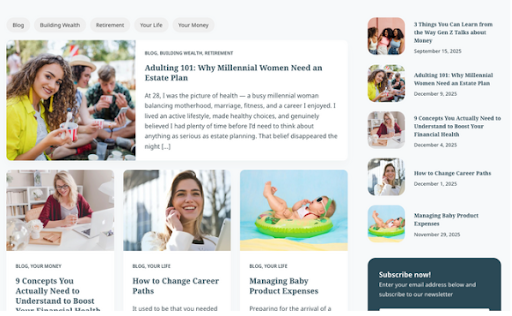
Consumers (B2C) decide on feeling: whether they can find an advisor they trust. Their marketing focused on reassurance, education, and real stories.
Reporting to the Board
I built the KPIs, benchmarks, and dashboards for the whole marketing function, and presented results and budget to the Board every quarter. For the first time, leadership could see exactly where each lead came from and what it cost.
The results
Leads grew 256% while cost per lead dropped 55%, and every channel improved at the same time.
256% lead growth
55% lower cost per lead
2% → 10% paid conversion rate
3x organic traffic
1.45% → 3.5% email click-through rate
Paid ads can buy attention, but they can’t build a business on their own. The turnaround came from making every channel work together, so content fed SEO, SEO fed email, and email and paid reinforced each other. Get the system right, and the numbers follow.
